




Pieghe dell'anima
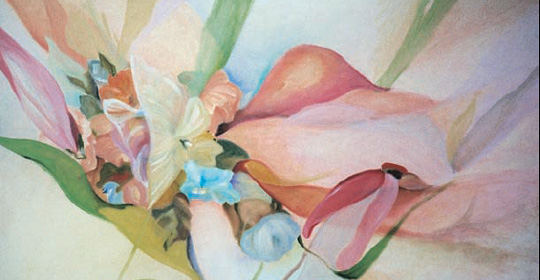
It is difficult, perhaps not even legitimate, to talk of a work of art by an artist who makes his practice a continual experimentation, as in the case of Angelica D’Ottavio.
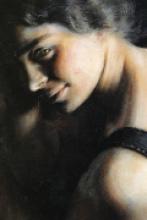
Versatile in all his characteristics, Angelica’s painting, and his sculpture, are open to the most diverse experiences and the most various techniques.
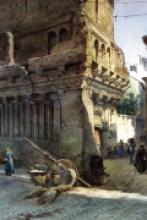
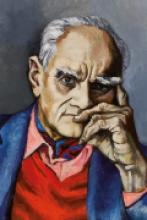
She moves between qualities reminiscent of the Impressionists and the Macchiaioli, with elements of an unconcealed naturalism, sometimes figurative, sometimes moving towards abstraction, and a decisive transfiguration of reality using thread-like lines or thick clots of colour.
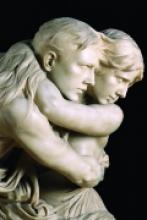
Attentive to the motion of his figures - caught in the ritual of a country dance or in a silent and desolate embrace - as he is to their metaphorical immobility, as spectral objects bent in the wind of history (a theme which is present in the Pictures as well as the sculpture), Angelica uses watercolour or oils, sculpts the white marble of Carrara, and shapes clear ceramics, shaping poor material as though they were a bright canvas, he cuts with the firm line of the dry point blade, conquering multiple expressive modes, with efficient creative force.
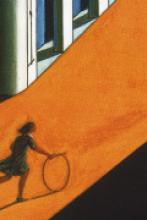
Everywhere the unsatisfied desire to seize a fleeting reality is seen: the figure vanishes in the multicoloured jubilation of flowers, is transformed in a game of deforming mirrors, or in a symbolic mixture of materials, with a changeable naturalness, always drammatically sad. Except sometimes the hand exults in sketching sinuous rhythums of stars and of children or traces improbable forms, almost like a polyphonic hymn to dreams and to the wind: then, in an etherial and provisional space, in a dreamlike world without time, the soul of the artist seems to grow a little quieter, satisfied with the lack of sense, and waiting for a better future.
Tullio Gregory